

The healthcare industry has undergone a significant digital transformation over the past decade. Today, patients no longer rely solely on referrals from family members, friends, or primary care physicians when choosing healthcare providers. Instead, they turn to search engines like Google to find doctors, dentists, chiropractors, therapists, clinics, hospitals, and specialized healthcare services.
When a patient searches for terms such as “best family doctor near me,” “dentist in Dallas,” “chiropractor in Chicago,” or “physical therapist in Houston,” healthcare providers that appear at the top of search results have a much greater chance of attracting new patients.
This is where Search Engine Optimization (SEO) becomes a game-changing strategy.
SEO for healthcare providers helps medical practices improve online visibility, increase website traffic, generate qualified patient leads, and establish trust in highly competitive healthcare markets.
In this comprehensive guide, we’ll explore how healthcare providers can leverage SEO to attract more patients, dominate local search results, and achieve long-term practice growth.
What Is Healthcare SEO?
Healthcare SEO is the process of optimizing a healthcare website to improve its rankings in search engine results pages (SERPs). The goal is to increase visibility for healthcare-related searches and attract patients actively seeking medical services.
Healthcare SEO includes:
- Keyword research
- On-page optimization
- Technical SEO
- Local SEO
- Content marketing
- Link building
- Reputation management
- User experience improvements
Unlike traditional marketing methods, SEO targets users who are already searching for healthcare services, making it one of the most effective patient acquisition strategies available.
Why SEO Matters for Healthcare Providers
Patients Start Their Journey Online
Research consistently shows that most patients search online before scheduling appointments. A strong search presence ensures your practice is visible when potential patients need care.
Increased Patient Acquisition
SEO attracts high-intent users who are actively looking for healthcare services.
Improved Credibility and Trust
Patients often associate higher Google rankings with professionalism and expertise.
Long-Term Marketing ROI
Unlike paid advertising, SEO continues generating traffic and leads over time.
Competitive Advantage
Many healthcare providers still underinvest in SEO, creating opportunities to outperform competitors.
Benefits of SEO for Healthcare Providers
A successful healthcare SEO strategy delivers numerous benefits:
Higher Search Rankings
Appearing on the first page of Google significantly increases visibility.
More Website Traffic
Improved rankings lead to more qualified visitors.
Better Patient Engagement
Relevant content helps patients find answers to their questions.
Increased Appointment Bookings
SEO drives users closer to conversion by targeting their search intent.
Enhanced Brand Authority
High-quality content positions providers as trusted experts.
Understanding Healthcare Search Behavior
Healthcare consumers use search engines throughout their healthcare journey.
Examples include:
Informational Searches
- What causes back pain?
- Symptoms of diabetes
- How to treat migraines
Comparative Searches
- Best dentist near me
- Top orthopedic surgeon in Dallas
- Chiropractor reviews in Chicago
Transactional Searches
- Book dentist appointment online
- Urgent care near me
- Physical therapist accepting new patients
Understanding these search behaviors allows healthcare providers to create content that aligns with patient needs.
Keyword Research for Healthcare SEO
Keyword research is the foundation of every successful healthcare SEO campaign.
Primary Keywords
Examples include:
- Healthcare SEO
- Medical SEO
- Healthcare marketing
- Medical practice SEO
- SEO for healthcare providers
Specialty-Specific Keywords
Examples:
- Dentist SEO
- Chiropractic SEO
- Physical therapy SEO
- Mental health SEO
- Dermatology SEO
Local Keywords
Examples:
- Family doctor in New York
- Dentist in Dallas
- Chiropractor in Chicago
- Pediatrician in Houston
Long-Tail Keywords
Examples:
- How to find the best family doctor
- What to expect during physical therapy
- Signs you need a chiropractor
Long-tail keywords often have lower competition and higher conversion rates.
Building an SEO-Friendly Healthcare Website
Your website serves as the foundation of your online presence.
Mobile Responsiveness
Most healthcare searches occur on mobile devices.
Your website should:
- Load quickly
- Display properly on all devices
- Provide easy navigation
Fast Loading Speed
Website speed directly impacts:
- User experience
- Search rankings
- Conversion rates
Secure HTTPS Connection
Patient trust is critical in healthcare.
Secure websites improve:
- Data protection
- User confidence
- Search engine rankings
Easy Navigation
Visitors should easily find:
- Services
- Locations
- Contact information
- Appointment scheduling
On-Page SEO for Healthcare Providers
Optimize Title Tags
Example:
Family Dentist in Dallas | Comprehensive Dental Care
Create Effective Meta Descriptions
Example:
Looking for a trusted family dentist in Dallas? Schedule your appointment today and receive personalized dental care.
Use Proper Heading Structure
- H1 for main topic
- H2 for major sections
- H3 for supporting information
Optimize Images
Include descriptive file names and alt text.
Example:
family-dentist-dallas.jpg
Internal Linking
Connect related pages to improve navigation and SEO performance.
Local SEO for Healthcare Providers
Local SEO is crucial because healthcare services are location-based.
Optimize Google Business Profile
Ensure your profile includes:
- Practice name
- Address
- Phone number
- Website
- Services
- Office hours
Collect Patient Reviews
Positive reviews improve:
- Search rankings
- Trust
- Conversion rates
NAP Consistency
NAP stands for:
- Name
- Address
- Phone Number
Maintain consistency across all online listings.
Local Citations
List your practice on:
- Healthcare directories
- Local business directories
- Medical associations
- Chamber of Commerce websites
Content Marketing for Healthcare SEO
Content marketing helps attract, educate, and convert patients.
Educational Blog Posts
Examples:
- Signs You Should Visit a Chiropractor
- Benefits of Preventive Dental Care
- Managing Chronic Back Pain
- How Physical Therapy Improves Mobility
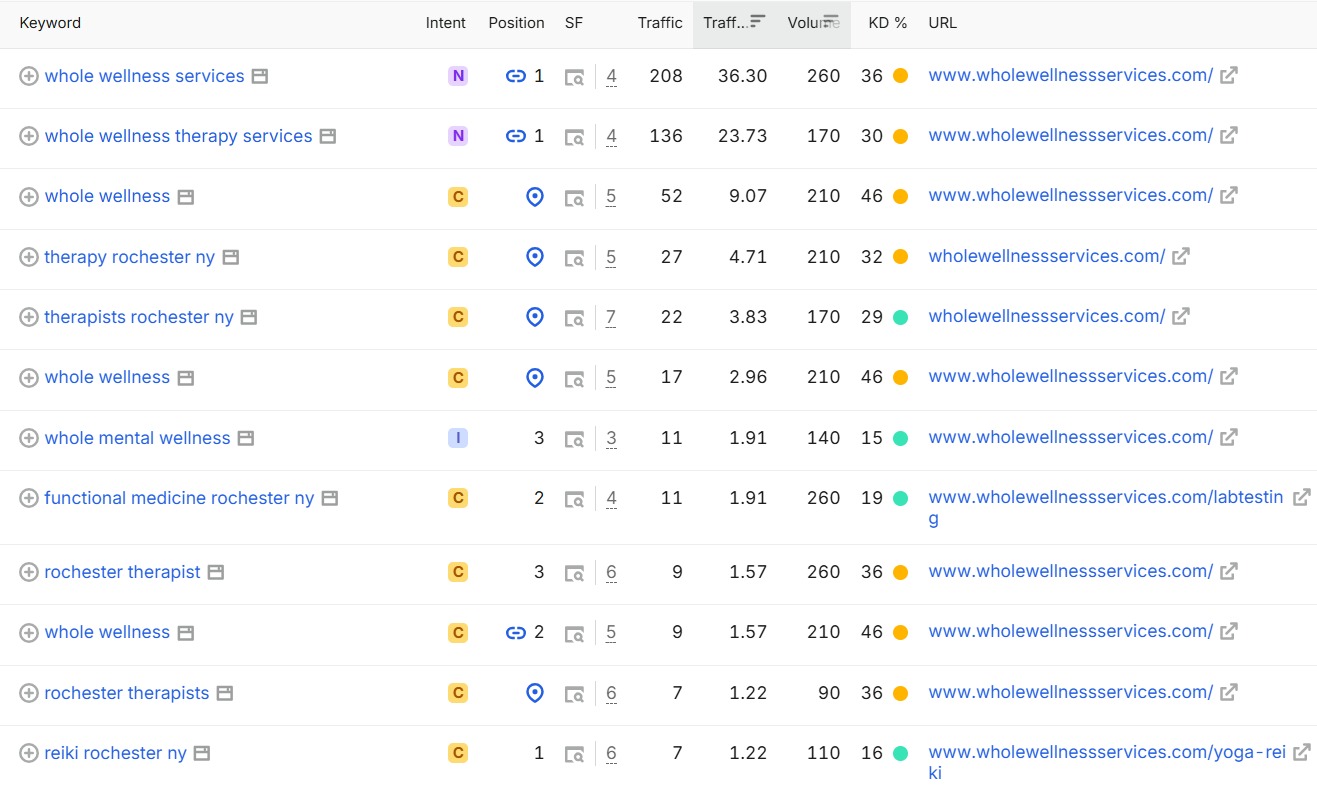
SEO Services Planet has extensive experience in helping healthcare providers across the USA achieve higher search engine rankings and increased online visibility. Our proven SEO strategies have successfully improved rankings for prestigious healthcare clients, including Wellness Directory USA and Whole Wellness Services. These websites are currently ranking for multiple competitive keywords, driving targeted traffic and generating valuable leads. Below is a snapshot showcasing some of the keyword rankings achieved through our healthcare SEO expertise.
Frequently Asked Questions
Answer common patient concerns.
Examples:
- How often should I see a dentist?
- What does physical therapy involve?
- Is chiropractic care safe?
Condition Pages
Create detailed resources covering:
- Symptoms
- Causes
- Treatments
- Prevention
Service Pages
Develop dedicated pages for each healthcare service offered.
Healthcare SEO and E-E-A-T
Google places special emphasis on healthcare websites because they fall under the “Your Money or Your Life” (YMYL) category.
Healthcare websites must demonstrate:
Experience
Showcase real-world healthcare expertise.
Expertise
Highlight credentials and qualifications.
Authoritativeness
Publish accurate, evidence-based content.
Trustworthiness
Provide transparent information and secure user experiences.
Technical SEO for Healthcare Websites
Technical SEO ensures search engines can crawl and index your site effectively.
XML Sitemap
Help search engines discover pages.
Robots.txt Optimization
Control search engine crawling behavior.
Fix Broken Links
Broken links negatively impact user experience.
Structured Data
Implement schema markup for:
- Medical organizations
- Physicians
- Reviews
- FAQs
- Local businesses
Healthcare Content Strategy
A successful content strategy includes multiple content formats.
Blog Articles
Provide educational information.
Patient Guides
Offer comprehensive resources.
Videos
Improve engagement and trust.
Infographics
Simplify complex healthcare topics.
Case Studies
Demonstrate successful patient outcomes while maintaining compliance.
Link Building for Healthcare Providers
Backlinks remain an important ranking factor.
Healthcare Directories
Submit profiles to reputable directories.
Medical Associations
Obtain links from professional organizations.
Guest Posting
Publish content on healthcare-related websites.
Local Partnerships
Collaborate with local organizations and businesses.
Community Involvement
Participate in local events and sponsorships.
Online Reputation Management
Reputation significantly influences patient decisions.
Monitor Reviews
Track feedback across:
- Healthcare review sites
- Social media
Respond Professionally
Address both positive and negative reviews appropriately.
Encourage Patient Feedback
Satisfied patients can become powerful advocates.
Common Healthcare SEO Mistakes
Ignoring Local SEO
Many providers overlook local optimization opportunities.
Thin Content
Low-quality content struggles to rank.
Poor Mobile Experience
Mobile usability is essential.
Slow Website Speed
Users abandon slow websites quickly.
Lack of Keyword Research
Targeting the wrong keywords limits growth.
Neglecting Technical SEO
Technical issues can prevent rankings.
Measuring Healthcare SEO Success
Track these key performance indicators:
Organic Traffic
Monitor search engine visitors.
Keyword Rankings
Track important healthcare keywords.
Appointment Requests
Measure patient inquiries and bookings.
Conversion Rates
Evaluate how effectively visitors become patients.
Local Search Visibility
Monitor Google Maps performance.
Review Growth
Track review quantity and quality.
Future Trends in Healthcare SEO
AI-Powered Search
Artificial intelligence is transforming search experiences.
Voice Search Optimization
More patients use voice assistants to find providers.
Entity-Based SEO
Google increasingly understands healthcare entities and relationships.
Personalized Search Results
Patient behavior influences search experiences.
Video Content Growth
Video continues becoming more important for healthcare marketing.
SEO Strategies for Different Healthcare Providers
SEO for Dentists
Focus on:
- Cosmetic dentistry
- Dental implants
- Emergency dentistry
- Local search optimization
SEO for Chiropractors
Target:
- Back pain treatment
- Neck pain relief
- Sports injury recovery
SEO for Physical Therapists
Optimize for:
- Rehabilitation services
- Sports therapy
- Mobility improvement
SEO for Mental Health Providers
Focus on:
- Counseling services
- Anxiety treatment
- Depression therapy
SEO for Medical Clinics
Target:
- Primary care
- Urgent care
- Preventive healthcare
Conclusion
SEO for healthcare providers is one of the most effective digital marketing strategies for attracting new patients and growing a medical practice. As more healthcare consumers rely on Google to find providers, practices that invest in SEO gain a significant competitive advantage.
By focusing on keyword research, local SEO, content marketing, technical optimization, reputation management, and patient-centered user experiences, healthcare providers can improve search visibility, build trust, and generate a consistent flow of qualified patient leads.
The healthcare landscape continues evolving, and practices that prioritize SEO today will be better positioned to dominate local search results, strengthen their online reputation, and achieve sustainable long-term growth.